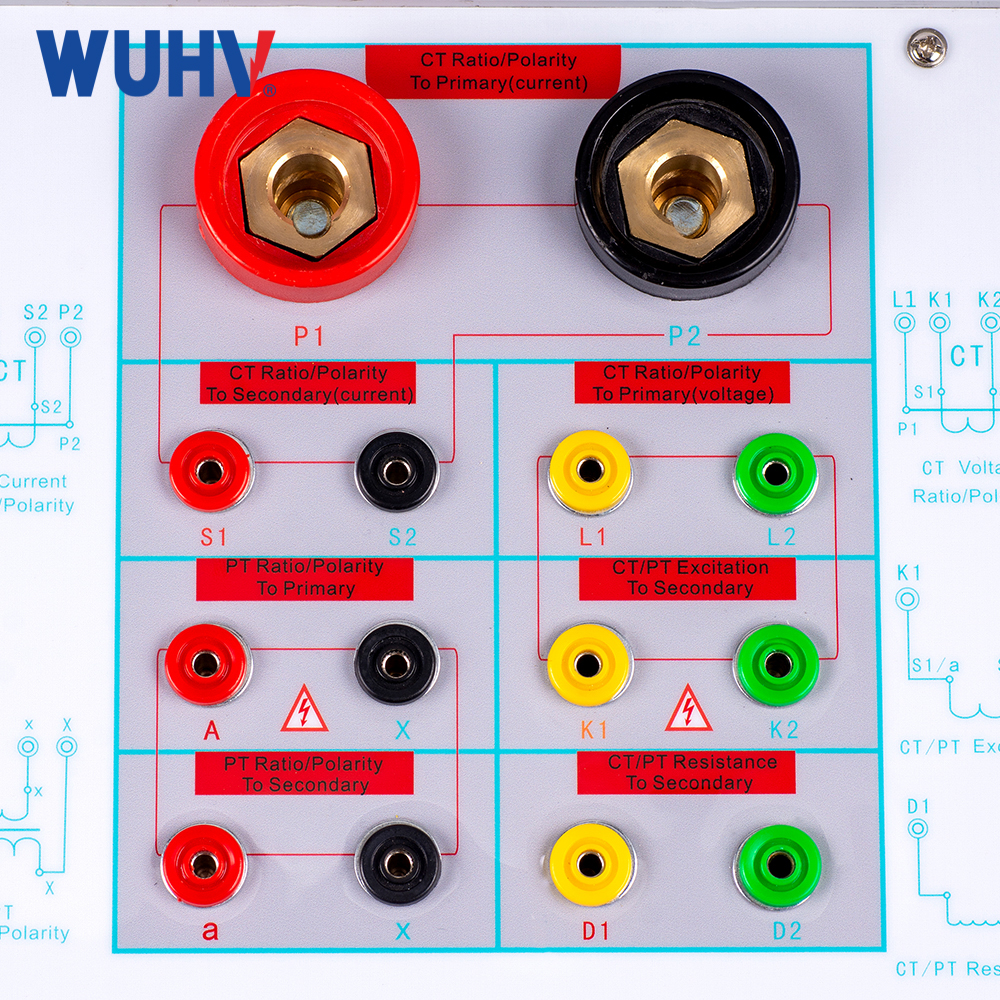


Product Introduction
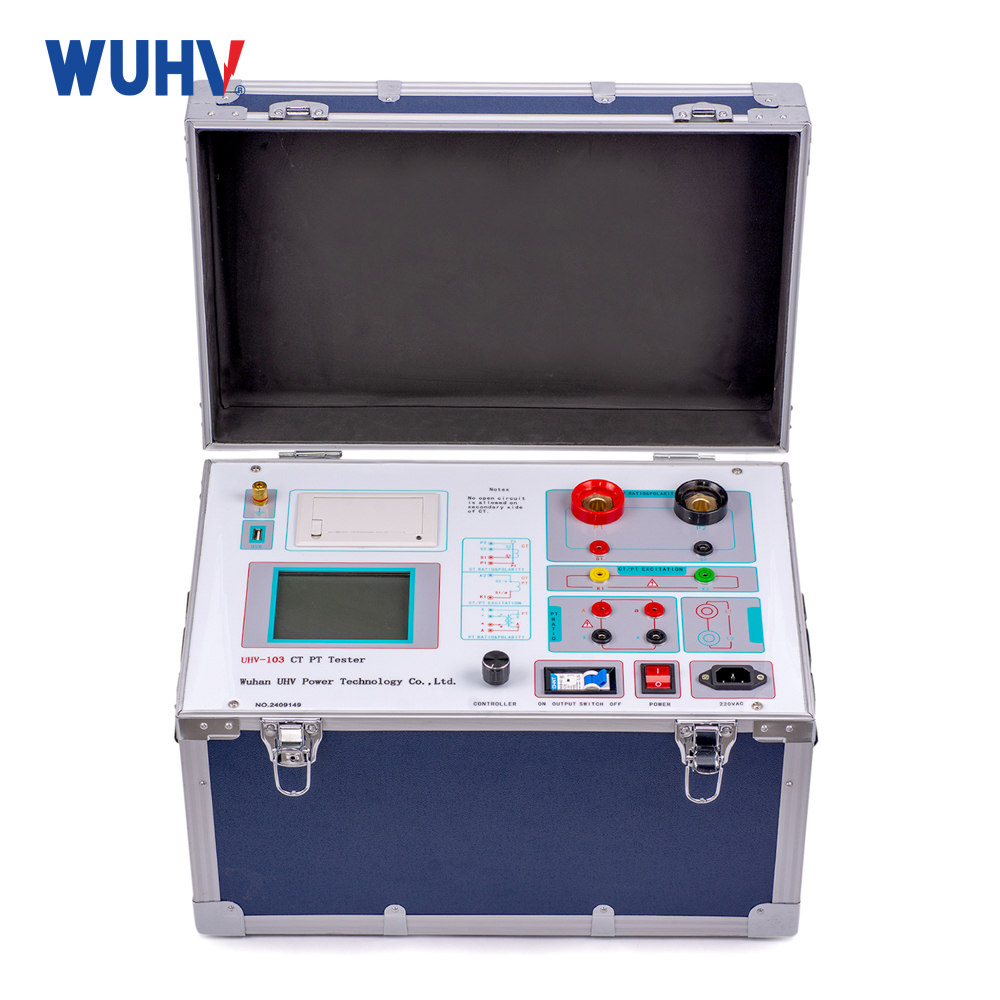
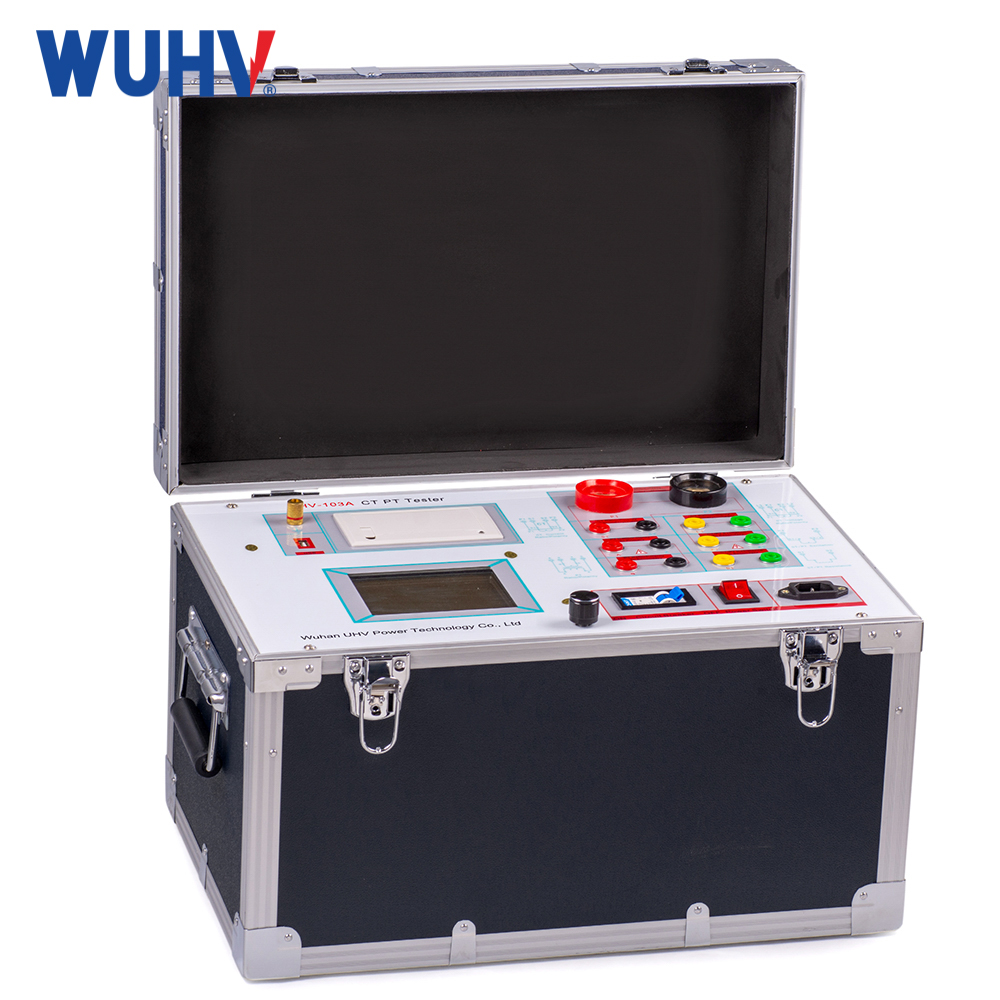
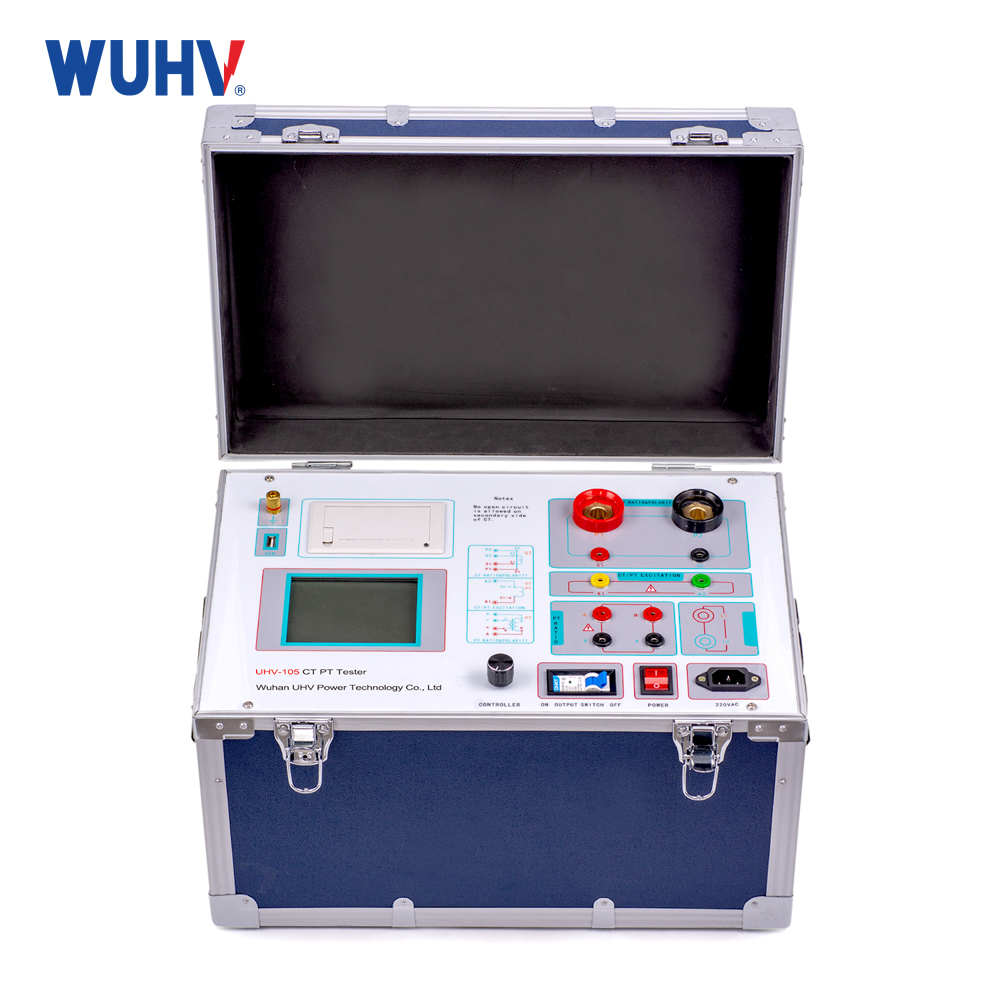
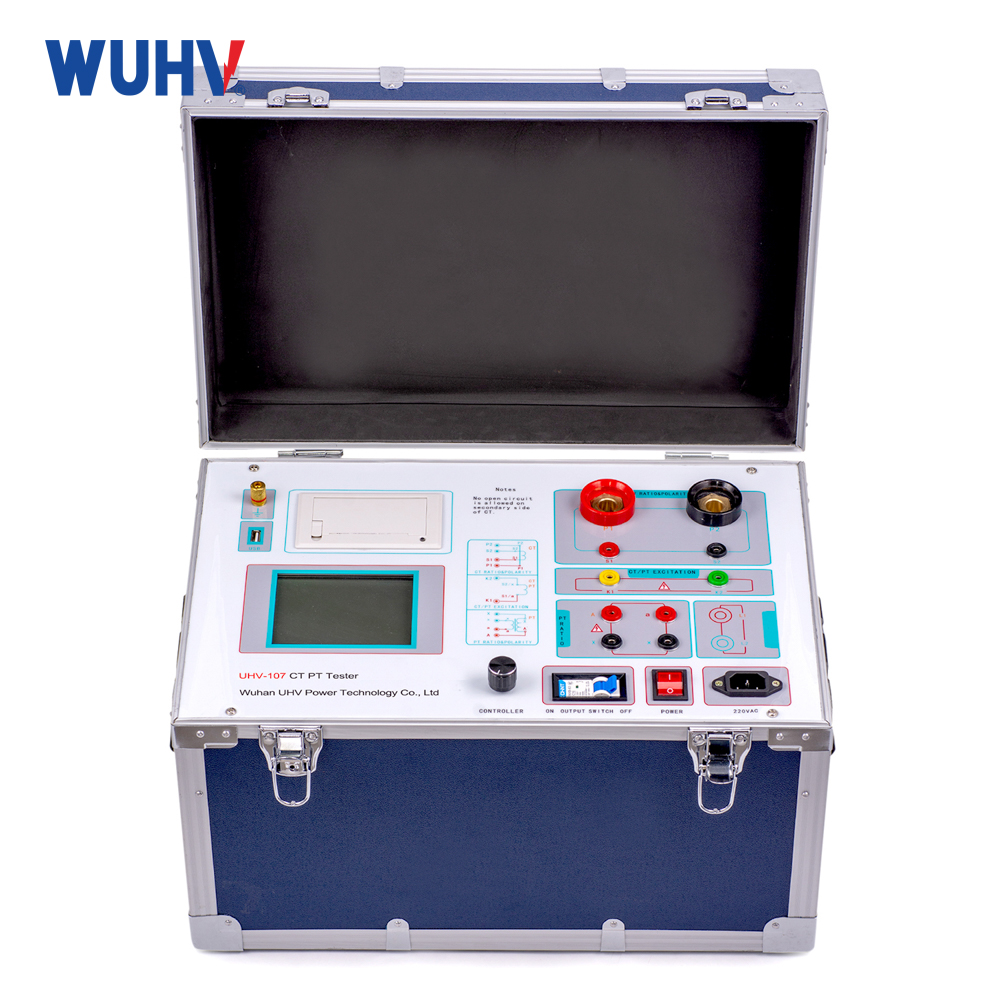
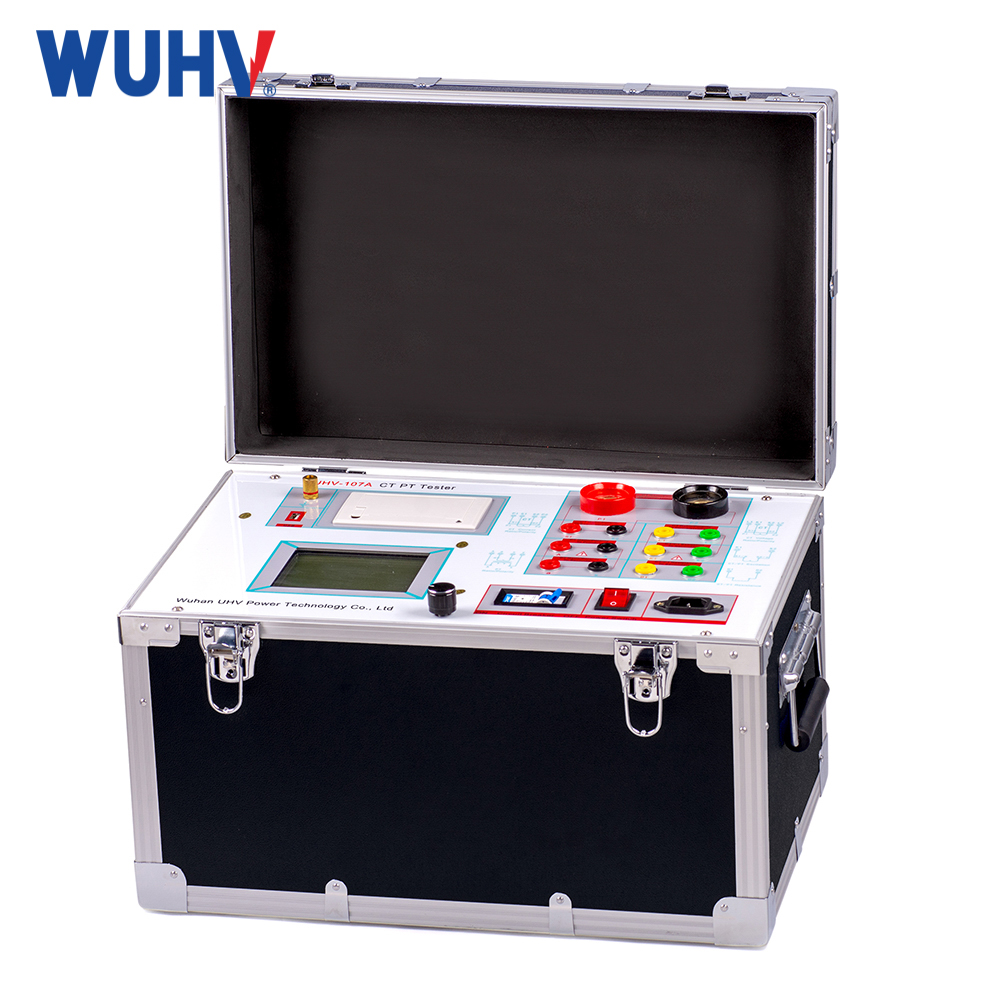
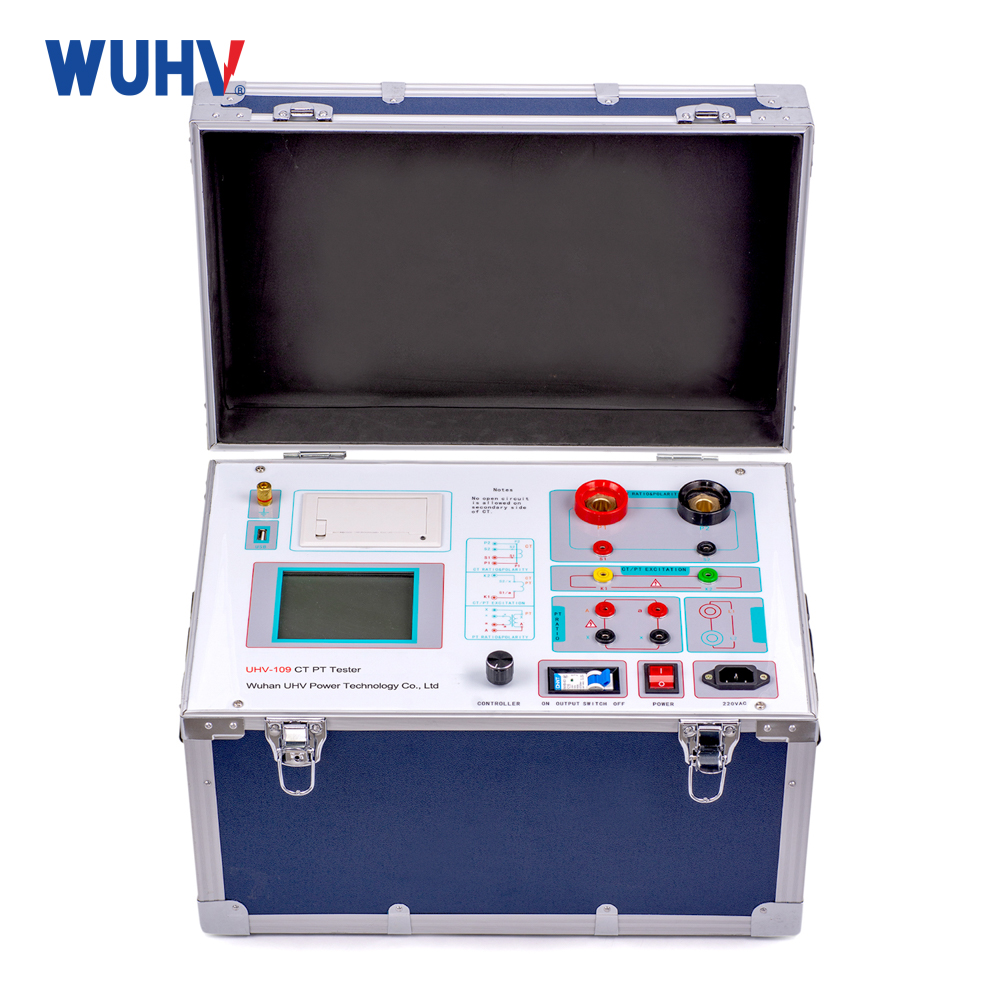
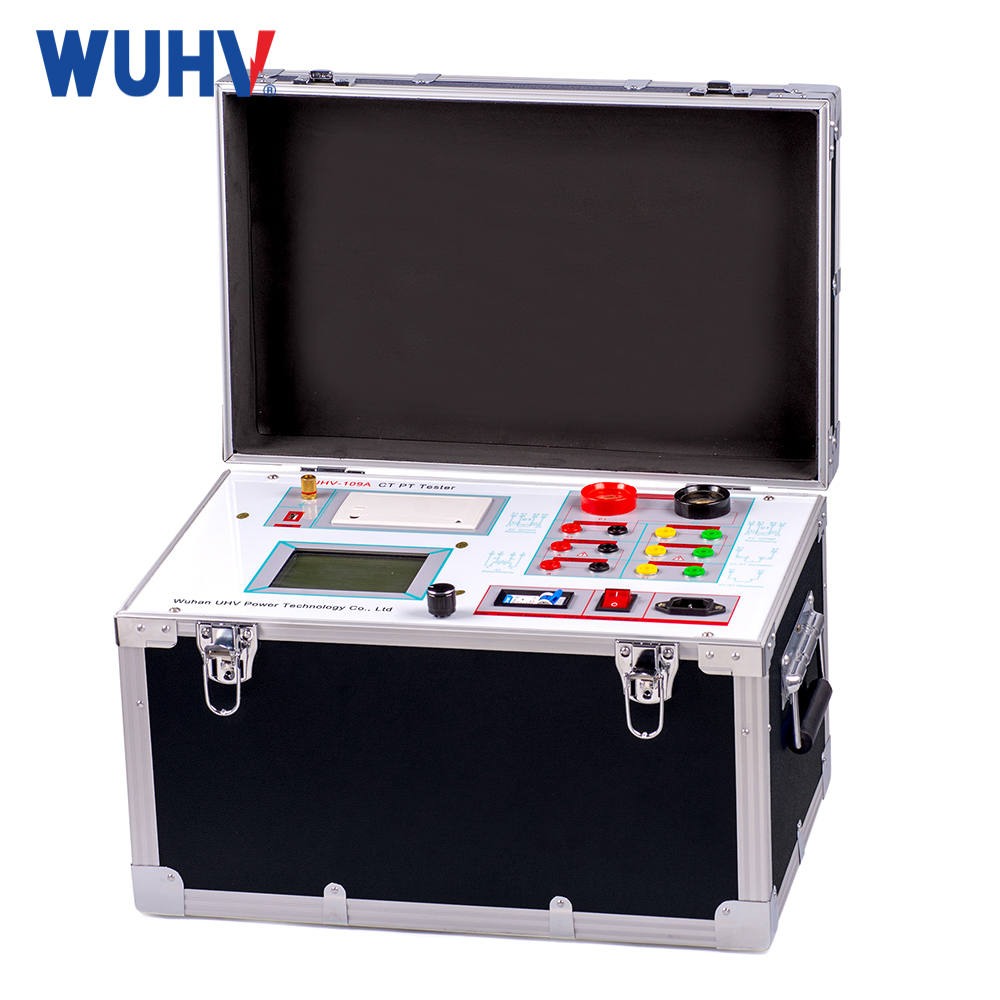
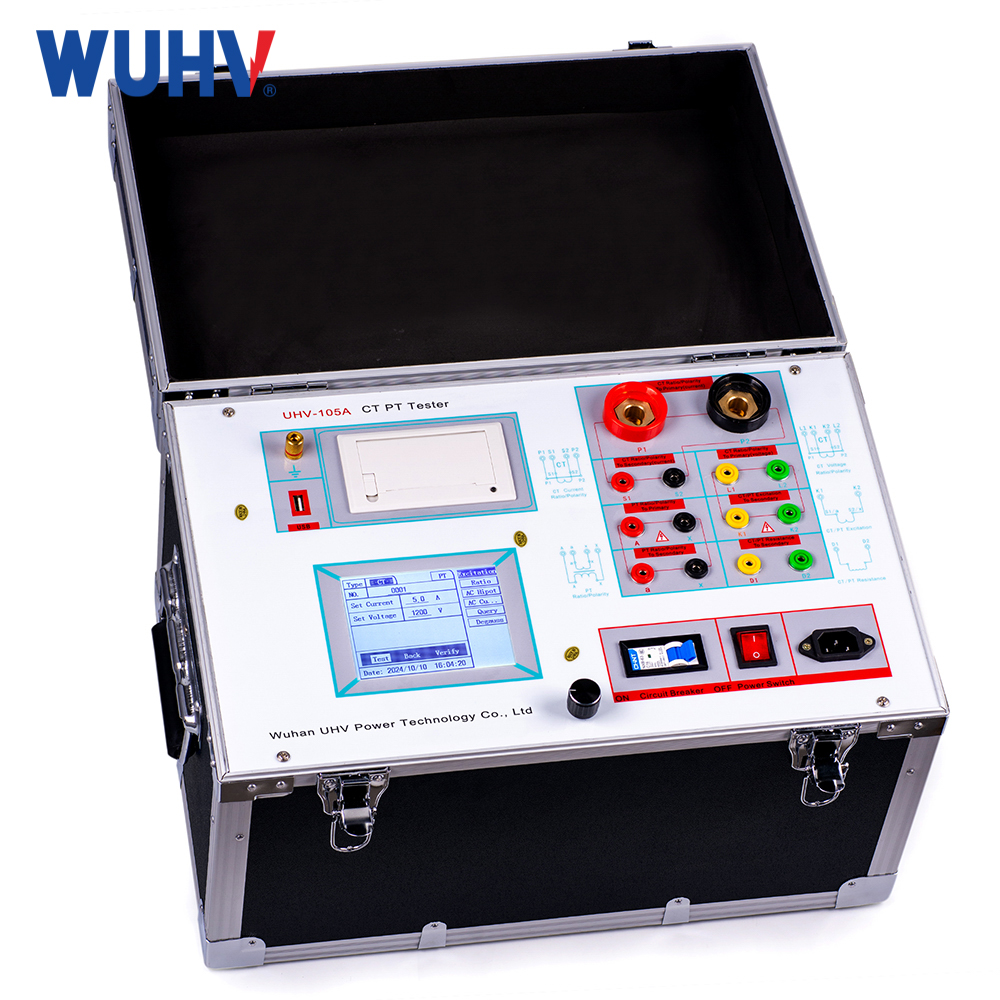
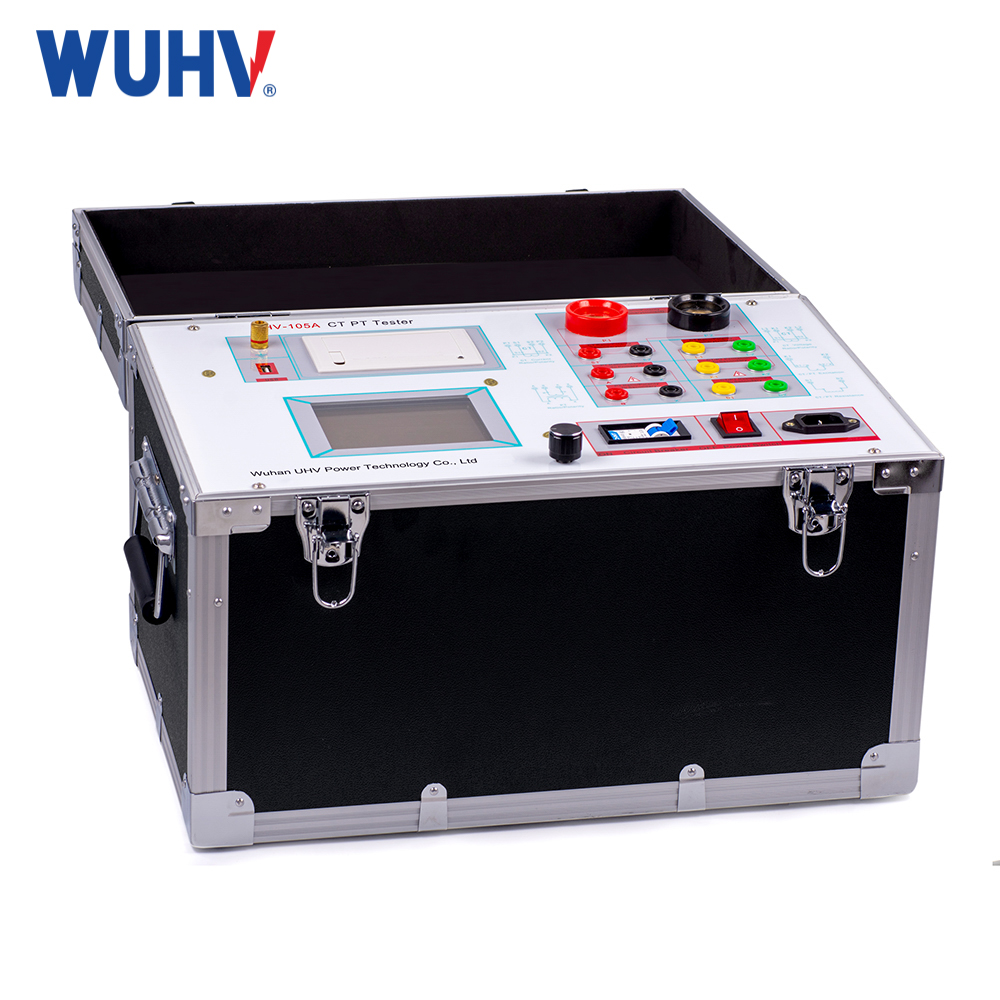
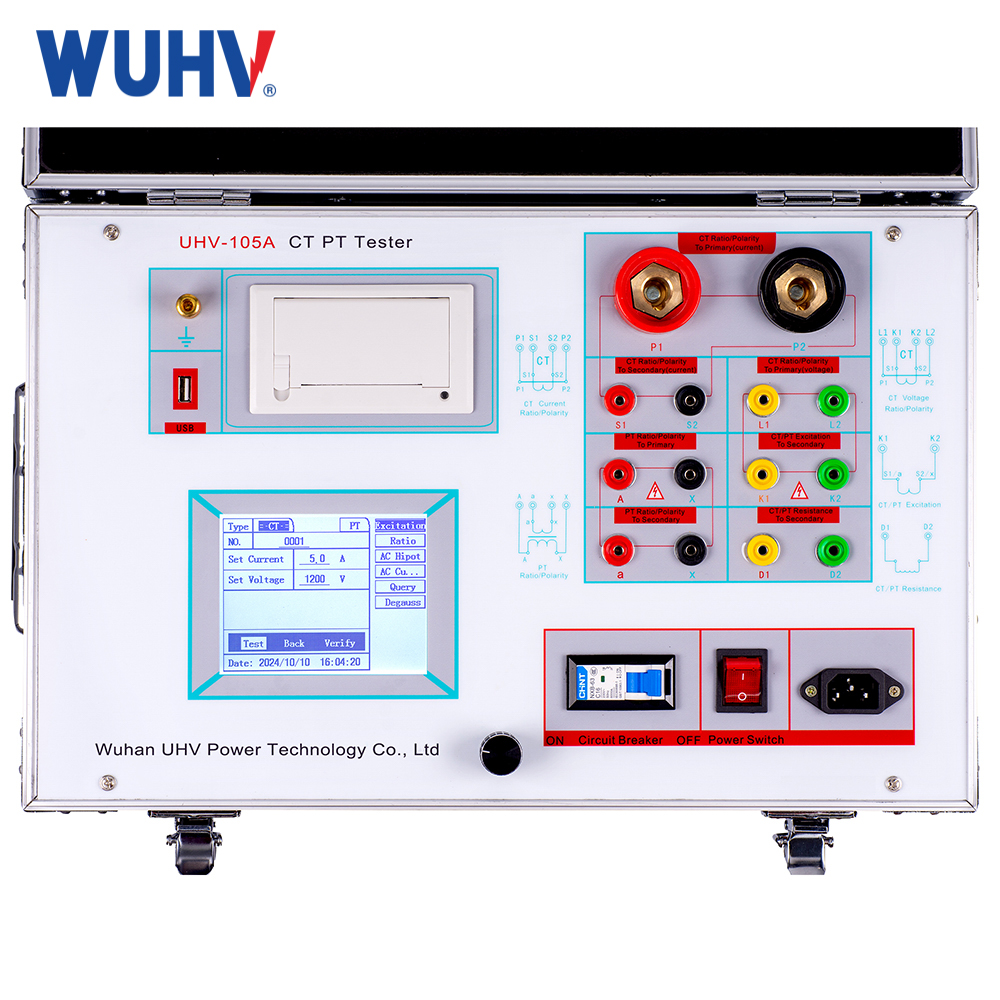
Wuhan UHV Power Technology Co.,Ltd., is a professional manufacturer and supplier of high-voltage power testing equipment in China.CT PT Characteristic Tester is a portable instrument designed for on-site verification of Protection-class (P-class) Current Transformers (CTs) and Voltage Transformers (VTs/PTs). It performs key tests including excitation characteristic (knee-point, saturation), turns/ratio testing, polarity verification, core demagnetization (degaussing), 5% and 10% error curve derivation, secondary circuit continuity and burden measurement, secondary winding insulation withstand (power frequency AC), and secondary load testing. Equipped with an integrated LCD display, a built-in micro printer for instant field reports, and USB data export capabilities, it offers comprehensive functionality with streamlined operation for efficient field use.
Functions
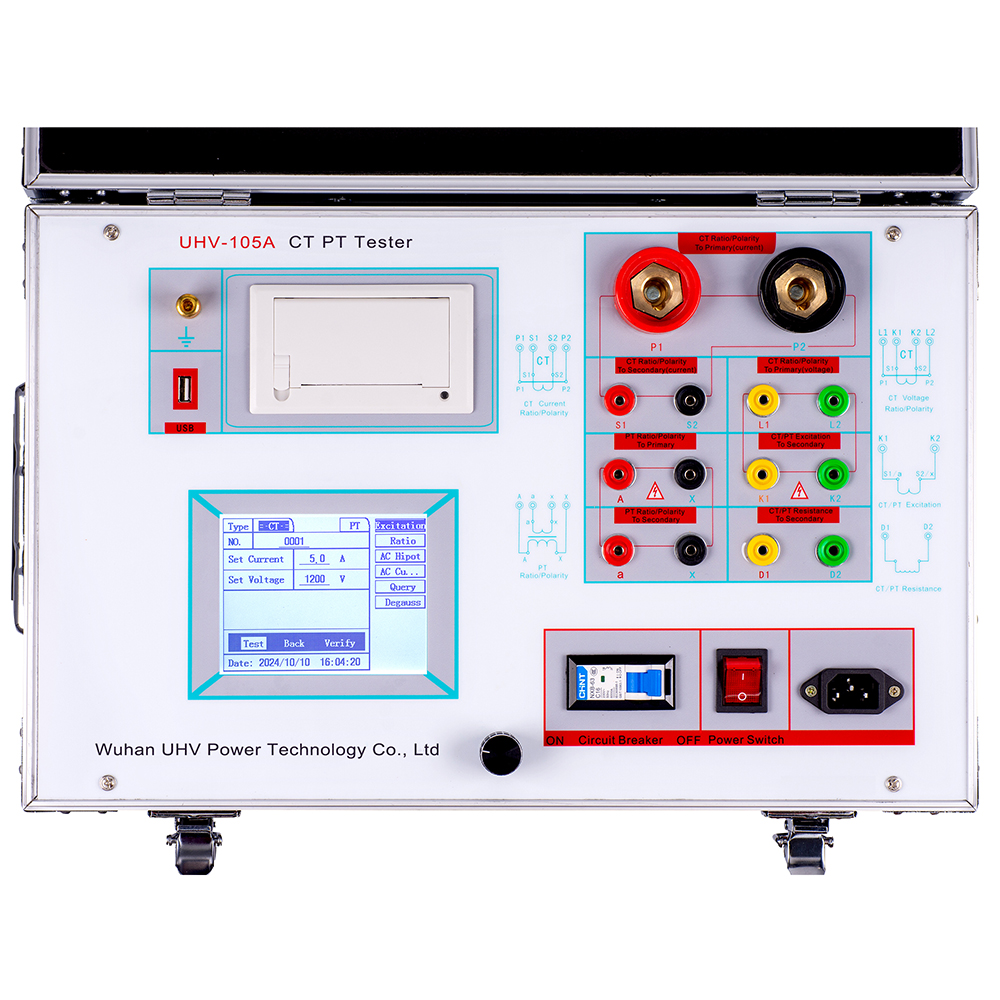
The CT/PT characteristic tester is a comprehensive test device used for performance testing of current transformers (CT) and voltage transformers (PT). It can automatically perform tests including excitation (VA) characteristics, turns ratio, polarity, ratio error and phase error, secondary winding resistance, secondary burden, error curve, and demagnetization. It also automatically calculates key parameters such as knee-point voltage, knee-point current, and accuracy limit factor. The device typically features one-key automatic testing, curve display, data storage, report generation, and printing functions. It is widely used in the production, installation, commissioning, maintenance, metrological verification, and preventive testing of transformers in power systems.
תכונות מוצר
1、Support detection of CT and PT
2、It meets the requirements of GB 20840.3-2013, GB 20840.2-2014 and other regulations
3、All test items can be completed by a single machine without external auxiliary equipment
4、With its own mini fast printer, it can print test results directly on the spot
5、Using intelligent controller, simple operation
6、Large screen LCD, graphical display interface
7、CT/PT (excitation) inflection point value is given automatically according to the procedure
8、The 5% and 10% error curves are automatically given
9、3000 sets of test data can be saved, which will not be lost after power failure
10、Support U disk to save data, can be read through the standard PC, and generate WORD report
11、Compact and light weight ≤22kg, very conducive to field testing
פרמטרים של מוצר
Function Table
| I. Current Transformer (CT) | II. Voltage Transformer (PT) |
| 1. Magnetization Curve | 1. Excitation Characteristic Test |
| 2. Transformation Ratio Test | 2. Transformation Ratio Test |
| 3. Polarity | 3. Polarity |
| 4. 5% and 10% error curve | 4. Withstand Test of Power Frequency |
| 5. Current Injecting | 5. Resistance Test |
| 6. FAST TEST | 6. Calculation of Knee Point Value |
| 7. Withstand Test of Power Frequency Alternating Current | 7. Actual Secondary Load Test |
| 8. Automatic Calculation of Excitation Knee Point Value | |
| 9. Actual Secondary Load Test | |
| 10. Resistance Test |
טבלת פרמטרים טכניים
| פרמטרים טכניים עיקריים | |
| Operational Power Supply | AC220V±20V, 50~60Hz |
| Equipment Power Supply Output Waveform | גל סינוס |
| Single Machine Output Voltage of Excitation Characteristic | 0~1200V |
| Excitation Current Set | 0~20A |
| Single Machine Output Current of Transformation Ratio Test | 0~1000A |
| CT ratio measurement range | 5~25000A/5A(5000A/1A) |
| PT ratio measurement range | 1~500KV |
| Load Range | 5~500VA |
| Resistance measurement range | 0.1~300Ω |
| שְׁגִיאָה | ≤0.5%(0.3%*Reading+0.2%*Range) |
| טמפרטורת פעולה | -10℃~+40℃ |
| לחות יחסית | <90RH% |
| גוֹבַה | ≤1000m |
| Overall Dimension(Length*Width*Height) | 450*350*350(mm) |
| מִשׁקָל | ≤28Kg |
Application Scenarios
New construction, expansion, and acceptance of substations: Used for performance testing of CT/PT after installation to ensure that the equipment meets design and operational requirements.
Power equipment operation, maintenance, and repair: Conduct preventive testing, periodic inspection, and fault diagnosis to promptly identify transformer performance abnormalities.
Relay protection commissioning: Test the excitation characteristics, ratio, and error parameters of protection-grade CTs to ensure reliable operation of the relay protection system.
Energy metering and calibration: Perform ratio, ratio error, and phase error tests on metering-grade CT/PT to ensure the accuracy of energy metering.
CT/PT manufacturing and quality inspection: Used for factory testing, type testing, and quality control to ensure products comply with relevant standards.
Research institutions and university laboratories: Used for transformer performance research, experimental teaching, and new product development, providing testing support for scientific research and talent cultivation.
FAQ about CT PT Characteristic Tester
What test items can the CT/PT characteristic tester perform?
Modern CT/PT characteristic testers typically support excitation (VA) characteristic testing, turns ratio testing, polarity testing, secondary winding DC resistance testing, ratio error and phase error testing, demagnetization testing, as well as automatic calculation of related parameters. Some high-end models can also automatically generate excitation curves and perform intelligent analysis of test results, thereby improving testing efficiency and accuracy.
What is the essential difference between this instrument and conventional single-function test equipment (such as ratio bridges and volt-ampere meters)?
Conventional equipment can only perform individual tests one at a time, requiring manual calculations and rewiring, which results in low efficiency and a higher likelihood of errors. In contrast, the CT/PT characteristic tester integrates all test items into a single main unit. Through automatic programmable sources and digital processing technology, it can sequentially complete multiple tests with just one connection, while simultaneously calculating derived parameters such as knee-point voltage, error curves, ratio error, and phase error in real time. This greatly simplifies on-site operation procedures.
How to choose a suitable CT/PT characteristic tester?
When selecting equipment, comprehensive consideration should be given to the type of test object (CT, PT, or both compatible), maximum test voltage, current output capability, measurement accuracy, supported test items, and data management functions. In addition, the actual application scenarios, industry standards, and future testing requirements should also be taken into account, and a model with a certain degree of expandability should be chosen.