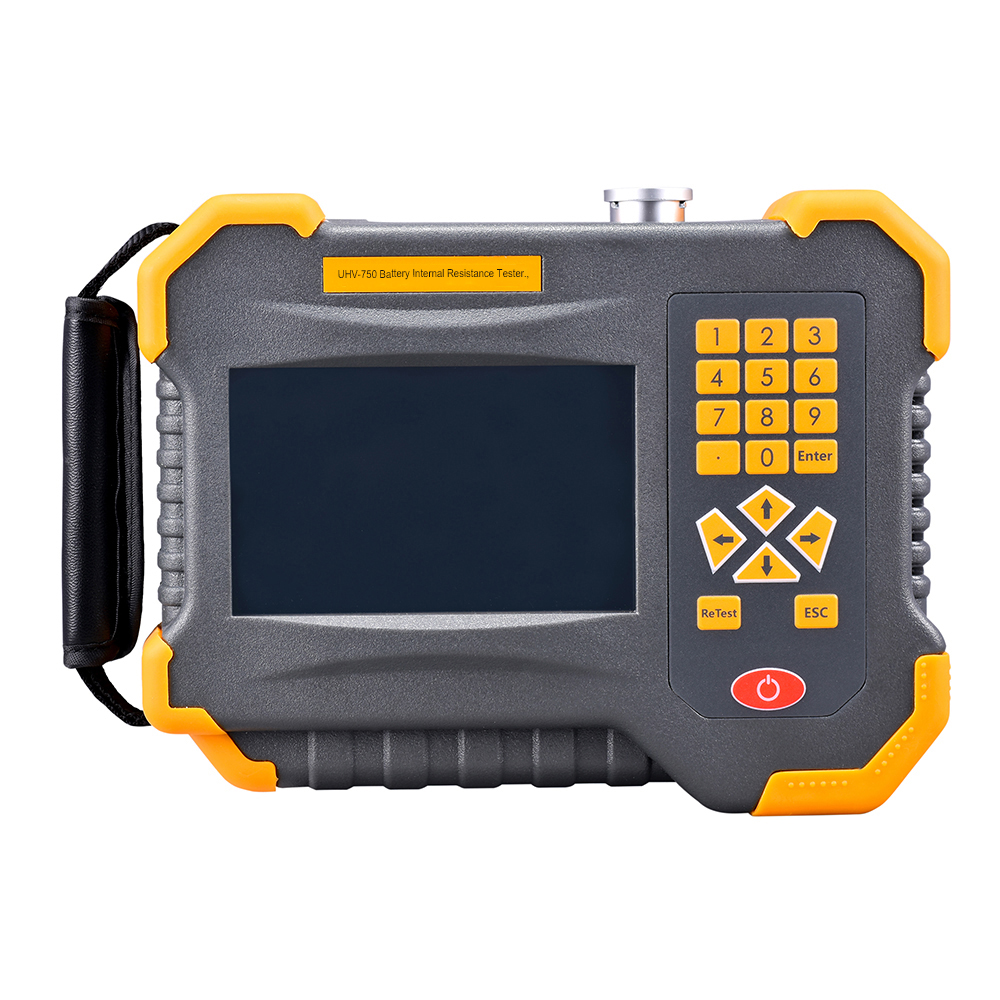
The internal resistance of a battery is one of the important parameters for judging its performance and operating status. With the increasing demand for power supply reliability in power systems, communication base stations, data centers, and industrial backup power sources, regular detection of battery internal resistance has become an important part of daily maintenance work. Choosing appropriate battery internal resistance testing equipment can help maintenance personnel detect changes in battery performance in a timely manner, identify potential faults, and reduce power supply risks caused by battery abnormalities.
The role of battery internal resistance testing
During long-term use, batteries will be affected by factors such as the number of charge and discharge cycles, ambient temperature, service life, and maintenance conditions, gradually leading to problems such as decreased capacity, aging of electrode plates, and poor contact at connection points. These changes may cause changes in the internal resistance of the battery.
By measuring the internal resistance and terminal voltage of the battery, the basic operating status of the battery can be understood, and the detection results can be compared with the initial data, historical records, and measurement results of the same group of batteries. If the internal resistance of a certain battery is significantly high, or there are significant differences with other batteries in the same group, it is necessary to further check its performance and connection condition.
It should be noted that internal resistance testing cannot completely replace capacity testing. For situations where accurate assessment of the actual power supply capacity of batteries is required, comprehensive judgment should also be made by combining detection methods such as capacity discharge tests.
What factors should be considered when choosing battery internal resistance testing equipment?
1. Clarify the type of battery
Different types of batteries have different structures, working characteristics, and testing requirements. Common types of batteries include valve regulated lead-acid batteries, colloidal batteries, nickel cadmium batteries, and lithium batteries.
Before purchasing equipment, the type, rated voltage, usage environment, and testing requirements of the tested battery should be confirmed to ensure that the instrument is suitable for the actual testing object. For users who need to test multiple batteries, attention should also be paid to the applicable range of the equipment and the corresponding measurement mode.
2. Pay attention to the measurement range and accuracy of internal resistance
The measurement range and accuracy of internal resistance directly affect the reference value of the detection results. Batteries with different capacities and structures may have significant differences in their internal resistance levels, so instruments cannot be selected based solely on a single measurement indicator.
When selecting, the internal resistance measurement range, resolution, basic error, and consistency of repeated measurements of the equipment should be checked. For power operation and maintenance units that require long-term tracking of battery status, the stability of measurement results is particularly important, as it helps to detect changes in battery internal resistance over time.
3. Check the voltage measurement function
The internal resistance and terminal voltage of the battery are two parameters that are frequently monitored in daily testing. Choosing equipment with internal resistance and voltage measurement functions can obtain more battery status information in one inspection process, improving on-site inspection efficiency.
If the detection object is a battery pack composed of multiple batteries, attention should also be paid to whether the instrument is suitable for the corresponding individual voltage range and the ability to measure under the operation of the battery pack.
4. Consider on-site inspection efficiency
For substations, communication rooms, data centers, and large energy storage systems, the number of batteries is often large. If complex wiring and operations are required for each inspection, it will increase the workload of maintenance personnel.
Therefore, when selecting equipment, attention should be paid to whether the operation is simple, whether the testing speed meets the on-site requirements, whether the testing line is easy to connect, and whether the equipment is suitable for long-term inspections. For situations where a large number of batteries need to be tested, models with data storage, batch testing, and fast data query functions can also be considered.
5. Emphasize data management and analysis functions
Battery maintenance not only requires obtaining current test results, but also understanding the trend of battery status changes over a period of time.
Devices with data storage, historical record query, data export, or computer connection functions are more suitable for establishing battery testing archives. By comparing measurement data at different times, maintenance personnel can identify batteries with continuously increasing internal resistance and arrange further inspections and maintenance accordingly.
For users with a large number of batteries, attention should also be paid to whether the equipment supports battery number management, detection result classification, and report generation, in order to improve the standardization of maintenance work.
6. Consider the usage environment and safety requirements
Battery testing is usually conducted in substations, distribution rooms, communication rooms, and industrial sites, and equipment needs to have structures and protective capabilities suitable for on-site work.
When purchasing, it is necessary to understand the operating temperature range, anti-interference ability, electrical safety design, enclosure protection level, and applicable conditions for online testing of the battery pack of the instrument. At the same time, operation should be carried out in accordance with the equipment manual and on-site safety regulations to avoid affecting the test results due to wiring errors or non-standard operations.
Application fields of battery internal resistance testing equipment
Battery internal resistance testing equipment is widely used in situations where backup DC power supply or battery status monitoring is required.
In the power industry, equipment can be used for battery inspection in substation DC systems, relay protection power supplies, and control power supplies, helping maintenance personnel detect abnormal units.
In the communication industry, it can be used for regular inspections of backup batteries in communication base stations and computer rooms, reducing the risk of backup power supply caused by battery performance degradation.
In data centers and industrial enterprises, equipment can be used for daily maintenance of UPS batteries, providing reference for the reliable operation of backup power systems.
In addition, this type of equipment can also be used for battery production, after-sales testing, and maintenance services, helping technicians record changes in battery performance and providing a basis for subsequent maintenance and replacement.
What should be noted when using a battery internal resistance tester?
In order to improve the reliability of the test results, it is necessary to check whether the instrument, battery connection terminals, and test wires are intact before testing, and confirm that the contact parts are clean and firmly connected. When measuring, it is advisable to maintain consistent testing conditions to avoid data deviation caused by poor contact, temperature differences, or different operating methods.
For the same group of batteries, it is recommended to establish an initial testing record and use the same testing method for comparison in subsequent maintenance. If the internal resistance of a battery is found to be significantly abnormal, further judgment should be made based on terminal voltage, appearance, temperature, connection status, and necessary capacity testing, rather than directly determining battery failure based on a single measurement result.
Meanwhile, the determination of internal resistance changes should refer to the technical information provided by the battery manufacturer, historical baseline data, and applicable maintenance standards. The internal resistance values of batteries of different brands and models cannot be simply compared using the same standard.
Choosing battery internal resistance testing equipment should not only focus on price or a single measurement parameter, but also take into account the battery type, measurement accuracy, detection efficiency, data management capabilities, and on-site usage conditions for comprehensive consideration.
For power, communication, data center, and industrial backup power users, a suitable battery internal resistance tester can improve daily inspection efficiency, help detect abnormal battery status, and provide data support for battery maintenance and replacement plans. Clarify the testing requirements before procurement and select equipment based on actual application scenarios in order to better meet the requirements of long-term operation and maintenance work.