UHV-321 Transformer Capacity Load No-load Tester
Product Introduction
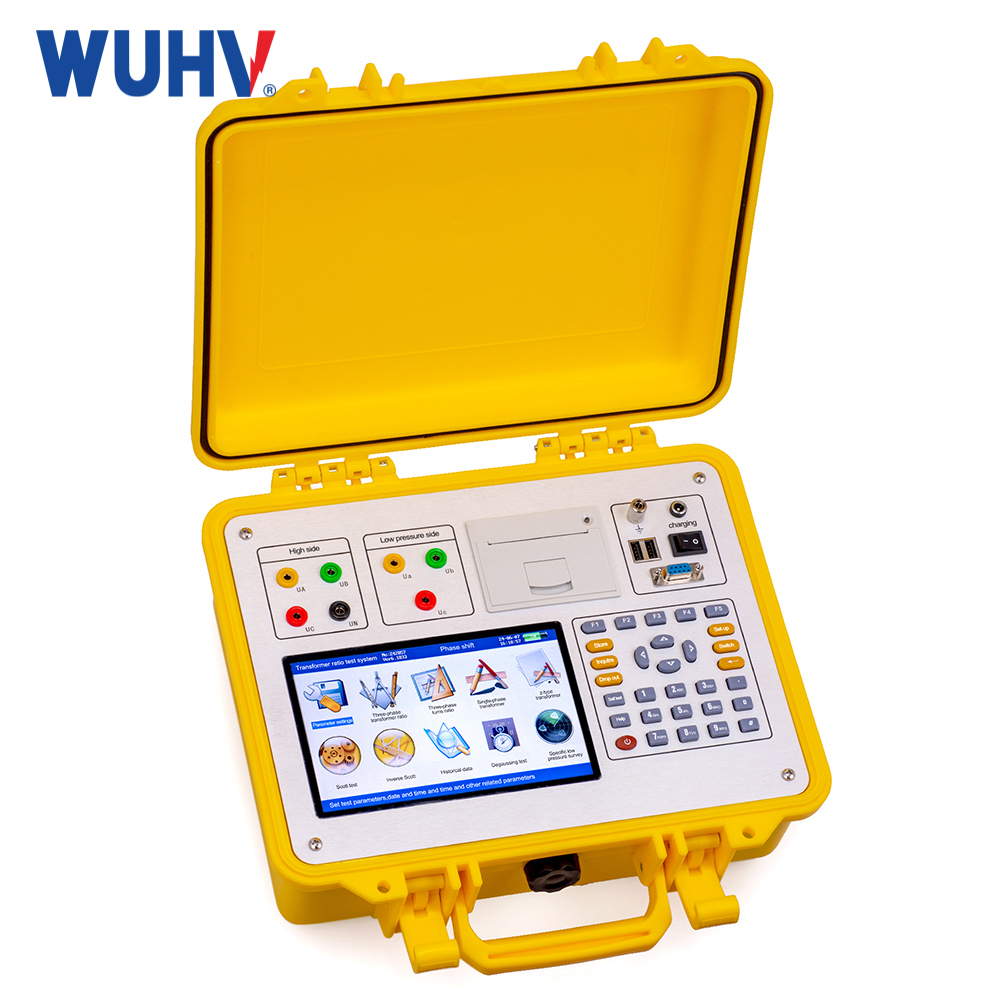
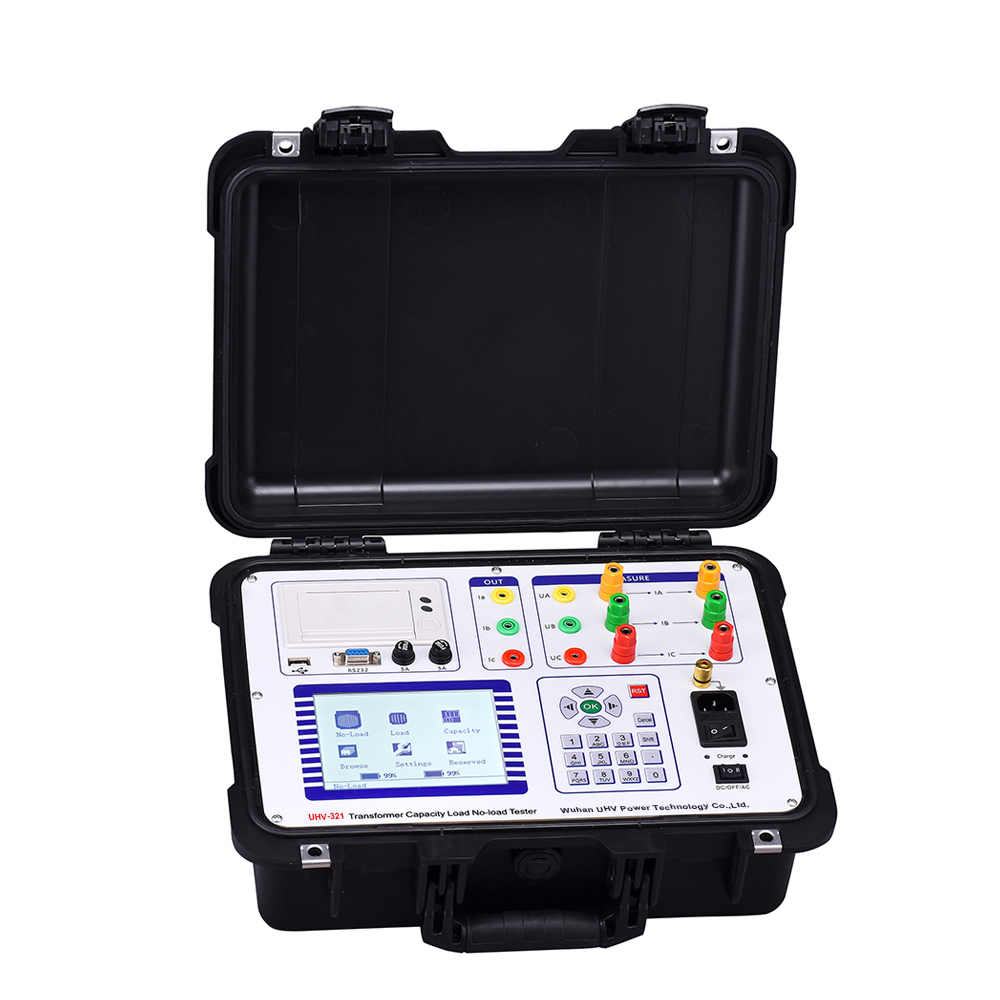
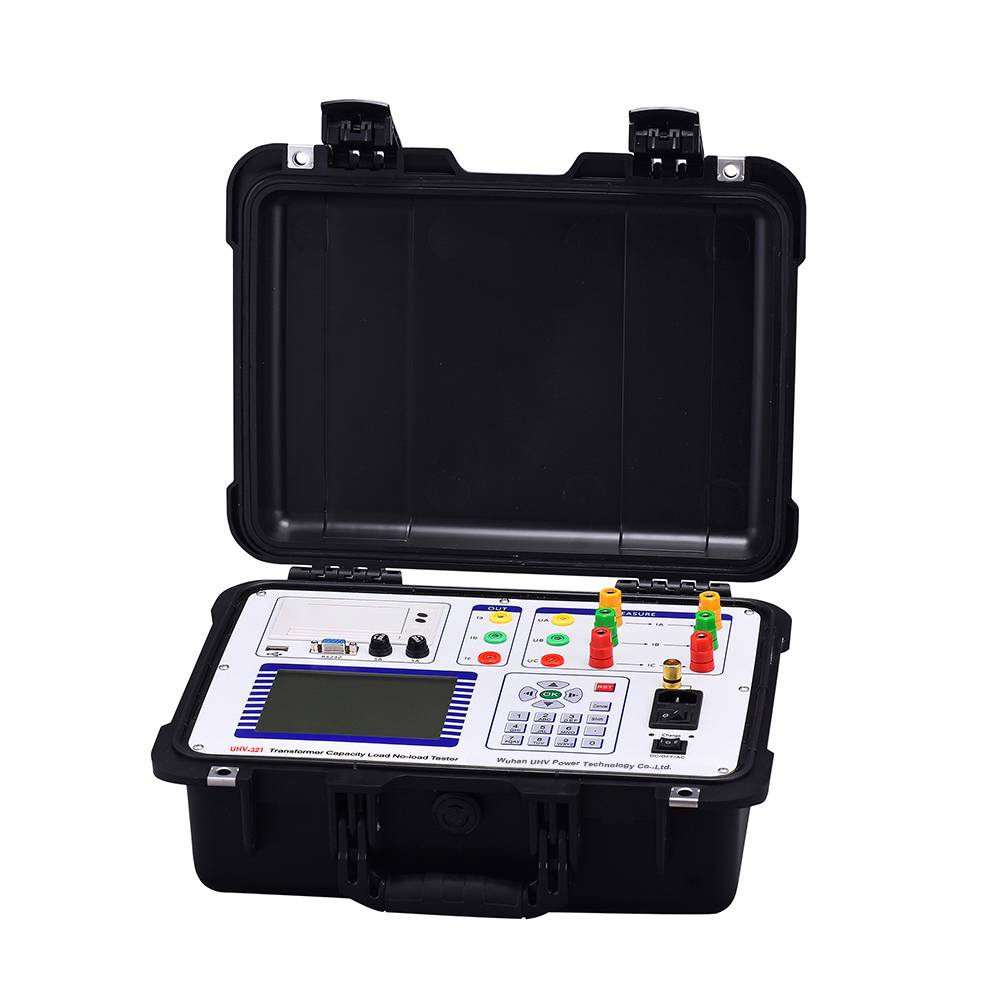
This product is specifically designed for capacity measurement, no-load loss testing, and short-circuit loss analysis of distribution power transformers. It also features harmonic analysis functionality, enabling effective assessment of on-site power quality. When testing three-phase transformers, the device automatically verifies wiring correctness and displays a three-phase current-voltage vector diagram. Furthermore, it incorporates multiple correction mechanisms—such as waveform, temperature, non-rated voltage/current, and calibration corrections—ensuring highly accurate and reliable test results.
Common Troubleshooting
Boot no display: first off, open the socket on the back panel AC 220V fuse box, check the fuse box, you can replace insurance. The screen suddenly black screen: press the reset button, to start measurement. Measurement and computation results are not correct: Check the external wiring, whether by manual operation, whether bad or take the wrong line; relevant parameter is incorrect. Measuring voltage and current display to zero the normal, check whether the current file fuse blown
Maintenance Responsibility
Product Characteristics
1. Measure the transformer no-load current, no-load loss; short-circuit voltage, short circuit (load) loss, capacity.
2. Test methods: three-table.
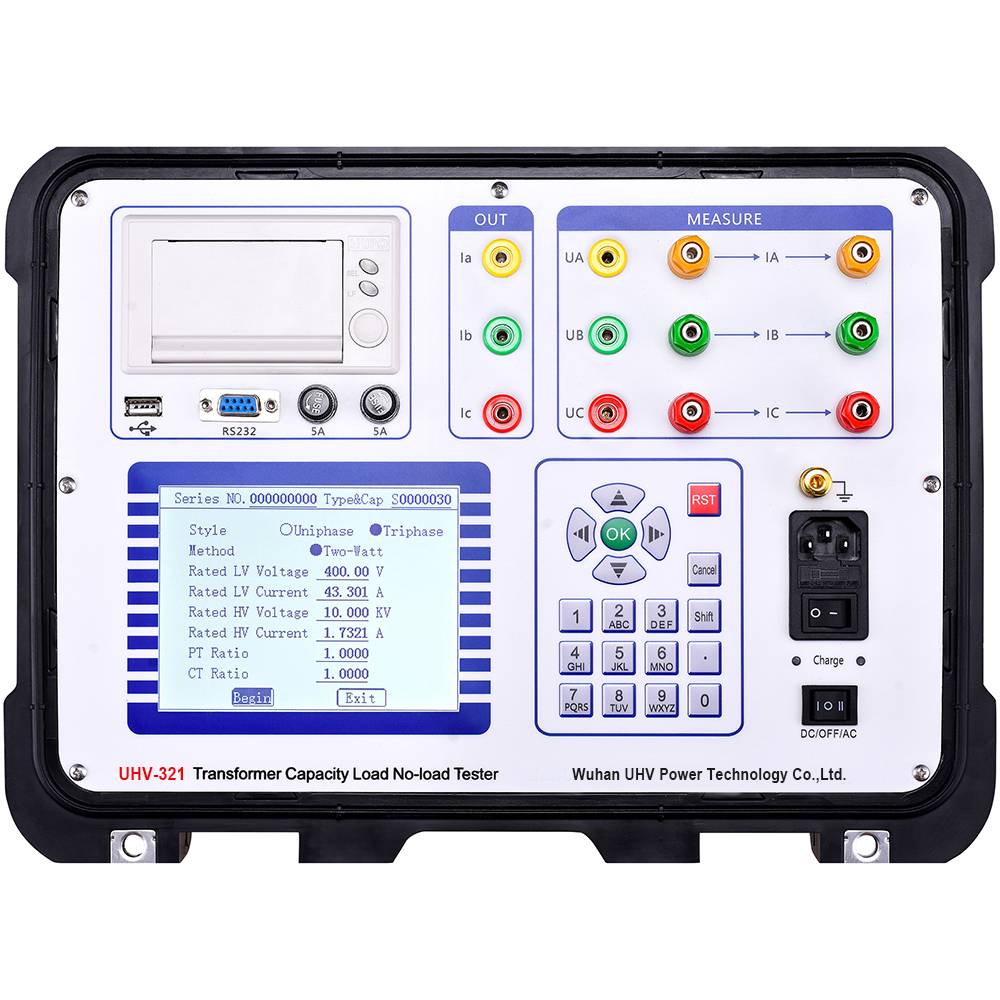
3. The device can auto check if the wire was correctly connected, and display the vector diagram of three phase current, voltage when test the three phase transformer.
4. Single machine can make the loading test for substation transformer under 1600KVA; can make the loading test with 1/3 of the rated current for substation transformer under 2500KVA(the device can convert to the loading losses parameters if the rated current under 1/3 of the rated current)
5. All the related test results are automatically corrected. Instrument can automatically such as: the waveform correction, temperature correction, non-rated voltage correction, calibration, and other non-rated current correction, so that more accurate test results.
6. 320x240 LCD, friendly man-machine interface, brilliance control, adapts to all seasons.
7. With electronic clock, auto record the data, time, it is good for saving and managing the test results.
8. Panel type printer can print the test results on site.
9. Data (specimen setting, test results, measurement time) can be saved on power failure and can be reviewed, it can store 500 groups test results, can connect with computers to transmit data.
10. Allow external connecting CT and PT to make extension measurement, can test the specimen with any parameters.
Main technical parameters
| טווח מדידת קיבולת | 30kVA ~ 31500kVA |
| טווח מדידה נוכחי | 0 -100A auto-switch the measurement range |
| דיוק מדידת זרם | ± (0.2% + 3 ספרות) |
| טווח מדידת מתח | Line Voltage0-750V;phase voltage 0-450V, auto-switch the measurement range |
| דיוק מדידת מתח | ± (0.2% + 3 ספרות) |
| התנגדות בידוד | > 100MΩ |
| זרם דליפה | <3.5mA |
| חוזק דיאלקטרי | the power connection on the chassis can withstand: 1500V External transformer can broaden the scope of measurement instruments |
| Frequency Range | 40 ~ 65Hz, accuracy class 0.2; |
| Power Input | AC220V ± 10% |
 |  |
Application Scenarios
1. Factory inspection of transformers
Ensure product quality: Before the transformer leaves the factory, conduct no-load characteristic testing to ensure that its various indicators meet the design requirements and relevant standards, and ensure product quality.
Provide performance data: Test data can serve as evidence of transformer performance, providing users with reliable data references.
2. Operation and maintenance of transformers
Monitoring equipment status: Regularly conduct no-load characteristic tests on transformers in operation, monitor their performance changes, and promptly identify potential fault hazards.
Assessing the degree of aging: By comparing test data from different periods, the degree of aging of transformers can be evaluated, providing a basis for developing maintenance plans.
Verify design parameters: Compare the test results with the design parameters to verify whether the actual performance of the transformer matches the design.
3. Fault diagnosis
Identifying the cause of the fault: When an abnormality occurs in the transformer, the no-load characteristic test can be used to analyze the cause of the fault and determine whether it is caused by iron core problems, winding problems, or other factors.
Assess the impact of faults: Evaluate the impact of faults on transformer performance and provide decision-making basis for maintenance.
4. Technical appraisal
Identification of Transformer Model: Based on the test results, the model and capacity of the transformer can be identified.
Evaluate transformer performance: Conduct performance evaluation on second-hand transformers or modified transformers to determine whether they meet the requirements for use.
5. Scientific research experiments
Research on Transformer Characteristics: In the process of transformer design, manufacturing, and research, no-load characteristic testing is a commonly used experimental method.
Validate theoretical model: Compare the test results with the theoretical model to verify the accuracy of the model.
Frequently Asked Questions
1. What is a transformer capacity and no-load load tester?
Transformer capacity and no-load load tester is a professional testing equipment used to detect key parameters such as transformer capacity, no-load loss, load loss, no-load current, short-circuit impedance, etc. It is widely used in power companies, transformer manufacturers, third-party testing institutions, and power construction units.
2. Why is it necessary to conduct transformer capacity testing?
Transformer capacity testing can verify the actual capacity of transformers, identify counterfeit and small to large transformers, evaluate transformer operating efficiency, reduce energy loss, and improve operational reliability.
3. Is it necessary to connect an external three-phase power supply during testing?
Most models are equipped with high-precision testing power supplies, which can complete on-site testing without the need for an external three-phase power supply, greatly improving detection efficiency, especially suitable for on-site maintenance and inspection work.
4. Do instruments need to be calibrated regularly?
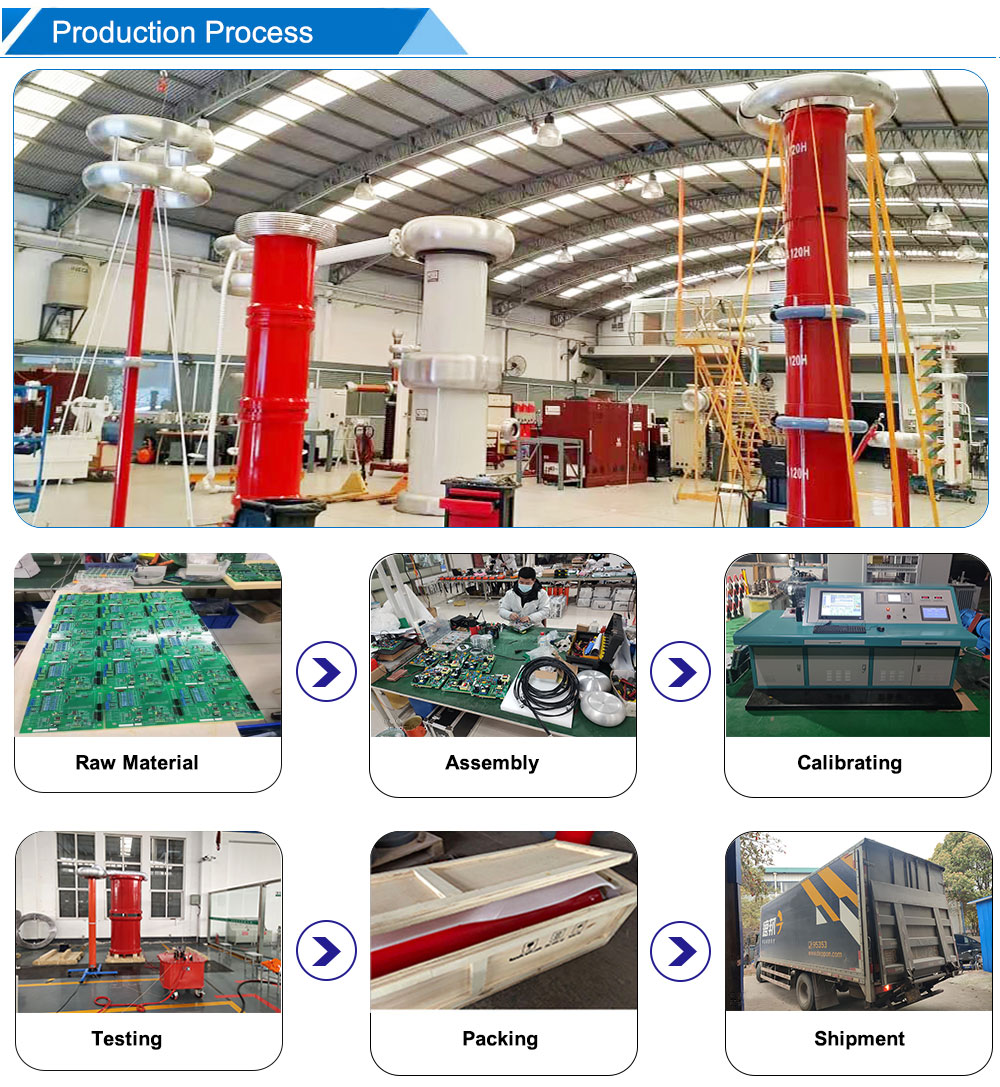
It is recommended to calibrate once a year. If the frequency of use is high or it is used for metrological testing, it should be regularly calibrated according to laboratory or national standards to ensure long-term measurement accuracy.
5. Is it suitable for on-site testing?
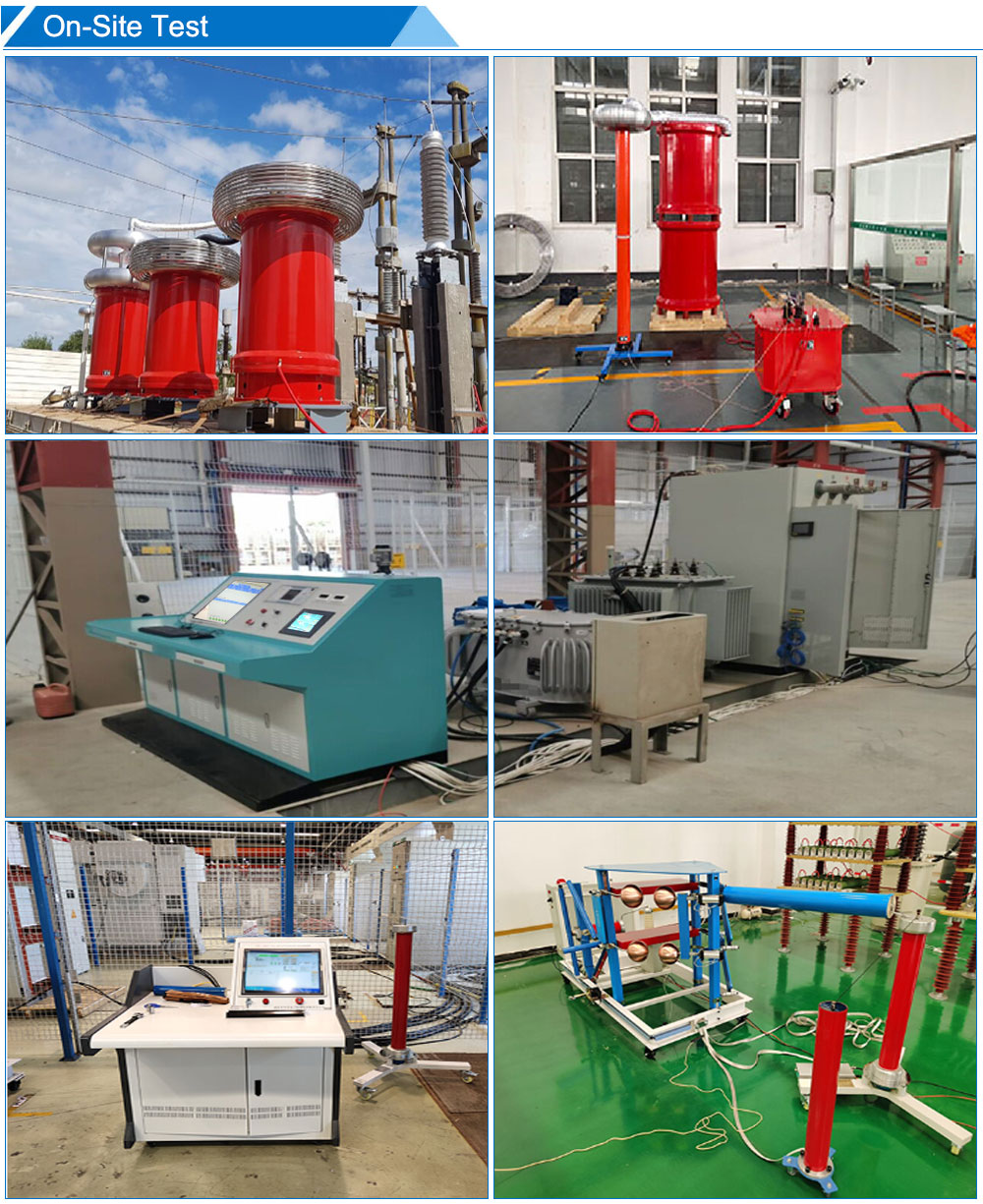
Very suitable. The equipment is small in size, light in weight, easy to carry, and has strong electromagnetic interference resistance, which can meet the testing needs of substations, power construction sites, and field operations.